


Clear Aligners or Braces? Process and Differences
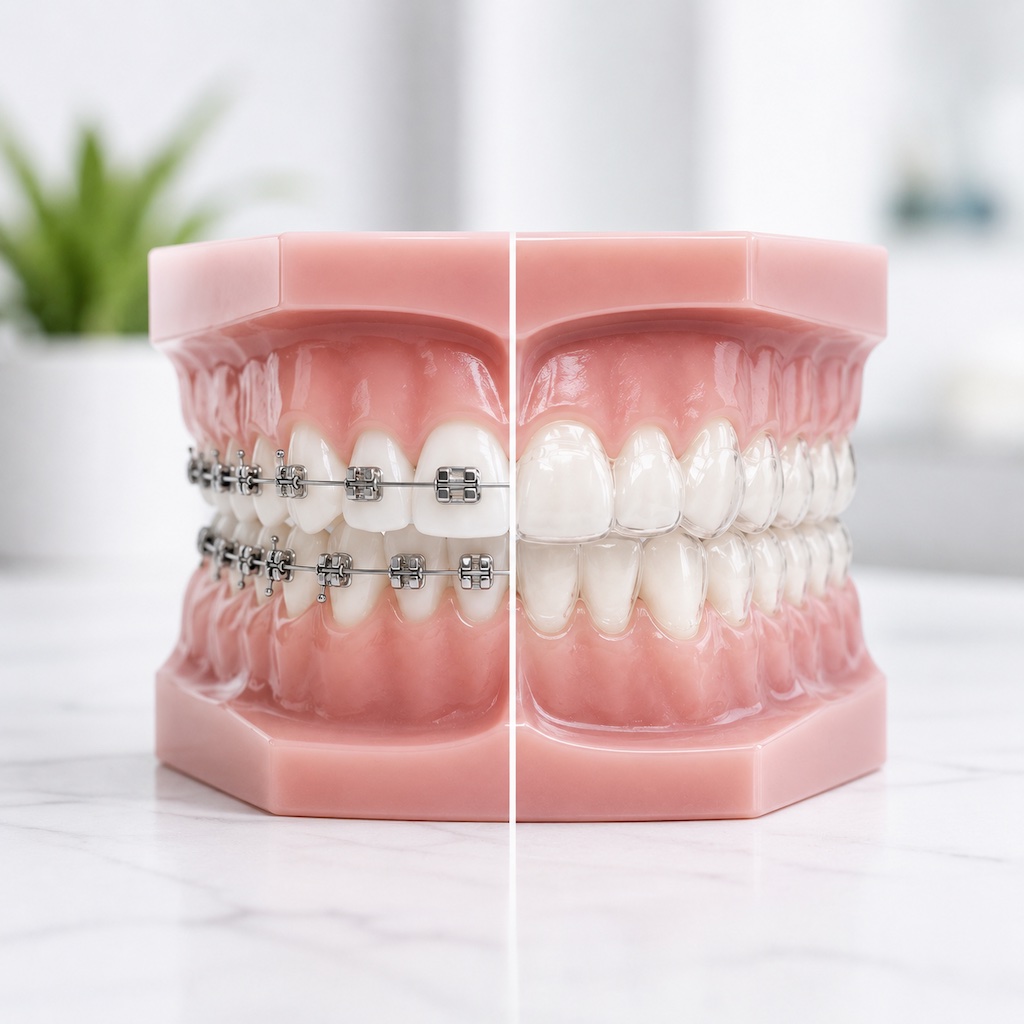
When you decide to begin orthodontic treatment for crowded teeth, bite problems, or gaps between your teeth, two main approaches come into play: traditional braces (fixed orthodontic treatment) and clear aligners. Both methods aim to move teeth into their desired positions; however, they differ in how they are applied, how they look, how comfortable they are, and which cases they suit best. The right choice depends on the type of misalignment in your teeth, your lifestyle, and your expectations. In this article, we compare the two methods to help you understand which one may be a better fit for you.
What Is Braces (Fixed Orthodontic) Treatment?
Braces treatment is the most established and widely used method in orthodontics, consisting of brackets bonded to the surface of the teeth and wires that connect those brackets together. The wires are tightened at regular intervals to apply continuous, controlled force to the teeth, gradually guiding them into the correct position over time. In addition to metal brackets, tooth-colored ceramic brackets are also an option for patients with aesthetic concerns. It is an extremely effective and reliable method, particularly for resolving complex crowding and advanced bite problems.
What Is Clear Aligner Treatment?
Clear aligners are custom-made, almost invisible thin transparent appliances. Produced in a series based on a treatment plan designed digitally, these aligners are replaced at set intervals to move the teeth gradually. Because they can be removed and put back in, they offer freedom both while eating and while brushing your teeth, which is an important advantage that makes oral hygiene easier. It is a modern treatment option that prioritizes aesthetic appearance and comfort, and it is becoming increasingly popular, especially among adult patients.
Clear Aligners vs. Braces: A Comparison
Evaluating the two methods side by side under key headings makes the decision-making process easier:
| Feature | Braces (Fixed Orthodontic Treatment) | Clear Aligners |
|---|---|---|
| Appearance | Noticeable (less so with ceramic) | Almost invisible |
| Removability | Fixed, cannot be removed | Can be removed whenever needed |
| Oral Hygiene | More demanding | Easy (remove to clean) |
| Complex Cases | Very broad coverage | Suitable up to a moderate level |
| Patient Discipline | Less dependent on it | Must be worn 20-22 hours a day |
| Comfort | May cause irritation at first | Smooth surface, more comfortable |
Which One Is Preferred in Which Situation?
The choice between the two methods largely depends on the complexity of the misalignment and the patient's lifestyle. In cases that involve advanced crowding, severe bite problems, and complex tooth movements, braces treatment generally delivers more comprehensive and predictable results, because it provides multidirectional control over each individual tooth. By contrast, clear aligners are an ideal option for mild to moderate crowding and for patients with high aesthetic concerns who want their treatment to be invisible.
Another decisive factor here is patient discipline. Because clear aligners can be taken out, the success of the treatment depends directly on wearing the aligners regularly for the recommended number of hours each day. For patients who feel they may not be able to maintain this discipline, fixed braces treatment may be a safer choice. Ultimately, the right method only becomes clear after an orthodontic examination and a digital assessment.
How Does the Treatment Process Work?
In both methods, the process begins with a detailed examination and X-ray assessment. In clear aligner treatment, a digital scan of the teeth is taken, the outcome of the treatment is planned from the start on a computer, and the aligners are produced in a series according to this plan. With braces treatment, the brackets are bonded to the teeth and the wires are adjusted during check-ups carried out at set intervals. The treatment duration varies in both methods depending on the difficulty of the case; while simple cases may be completed in a few months, complex situations can take longer. After treatment, a retention (retainer) phase is required in both methods so that the teeth keep their new position.
Making the Right Decision
The choice between clear aligners and braces treatment is not merely an aesthetic preference; it is a clinical decision based on the structure of your teeth and your treatment goals. Both methods produce successful results when applied for the right indication; what matters is determining the one best suited to your case. As Estetica Denta, we examine the condition of your teeth through a digital orthodontic assessment and decide together on the treatment option that best meets your expectations.
Braces or Clear Aligners? An Orthodontic Assessment in Etimesgut
As the article shows, the choice between aligners and braces comes down to how complex your case is and how you live your daily life, and only an orthodontic examination settles it. Our clinic in Bağlıca offers both options within its orthodontics service, so the recommendation you get is based on your teeth rather than on which method the clinic happens to provide.
Because orthodontic treatment runs for months with regular adjustment visits, a clinic close to home in Etimesgut makes it much easier to stay on schedule, and consistency is what actually delivers the result. If you are weighing up the two methods, book an assessment or send us your questions first; treatment duration and cost only become clear after the examination.
Frequently Asked Questions (FAQ)
Is clear aligner treatment as effective as braces?
In suitable cases, yes. For mild to moderate crowding, clear aligners can deliver results just as effective as braces treatment. However, in very advanced bite problems and complex tooth movements, braces treatment provides more comprehensive control. Which one will be effective depends on your particular case.
Can I eat while wearing clear aligners?
You can eat comfortably by removing the aligners; this is a significant comfort advantage over braces treatment. After eating, you simply brush your teeth and put the aligner back in. That said, keeping the aligners in for the recommended number of hours each day is essential for the success of the treatment.
Is braces treatment painful?
Each time the wires are tightened, you may feel mild pressure and sensitivity that can last a few days; this is normal and passes over time. With clear aligners, you may notice a similar feeling when switching to a new aligner, but it is usually milder. In both methods, this is temporary.
Can adults have orthodontic treatment too?
Absolutely. There is no age limit for orthodontic treatment; as long as the teeth and gums are healthy, treatment can be carried out at any age. Adults with aesthetic concerns most often prefer clear aligners because of their invisibility.
How do I find out which option is right for me?
The most reliable approach is an orthodontic examination. At Estetica Denta, serving in Bağlıca, the condition of your teeth and your expectations are assessed digitally to determine the method best suited to you. By booking an appointment, you can find out which treatment is the best fit for your smile.


