


Is Wisdom Tooth Extraction Painful? The Healing Process
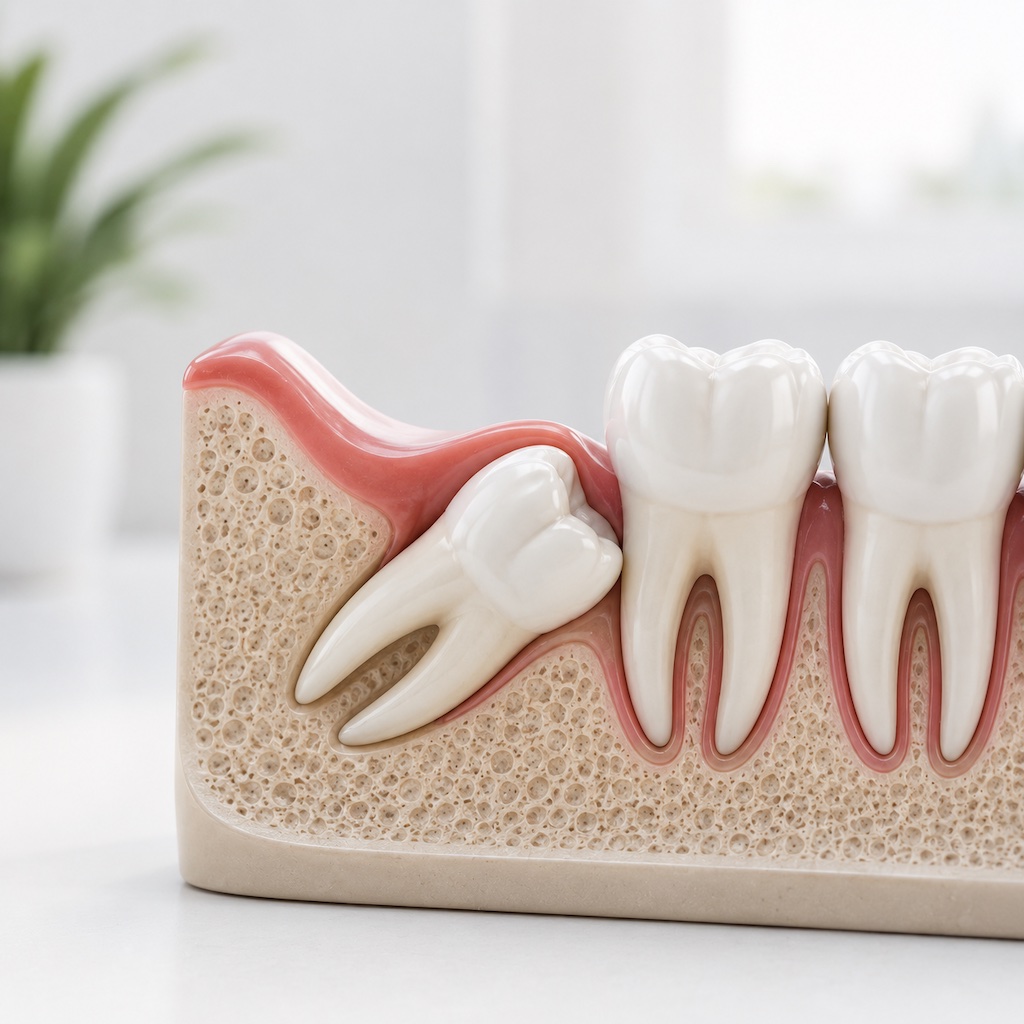
Wisdom teeth are the last teeth to come through in our mouths, and they tend to cause the most problems. Because there is often not enough room in the jaw, they frequently remain partially impacted, grow sideways, or press against the neighbouring teeth. For this reason, wisdom tooth extraction becomes unavoidable for many people. Once the decision to extract has been made, the first question on everyone's mind is almost always the same: "Will it hurt?" In this article, we explain step by step whether wisdom tooth extraction is painful, how the healing process unfolds, and what you should pay attention to afterwards.
Why Are Wisdom Teeth Extracted?
Not every wisdom tooth needs to be removed; a wisdom tooth that has erupted in a healthy way, bites correctly against the opposing tooth, and can be kept clean may well stay in the mouth. In most cases, however, these teeth cause trouble. When there is not enough room in the jaw, the tooth remains impacted or grows sideways and presses against the tooth in front of it. This leads to problems such as pain, decay, gum inflammation, and crowding. Extraction is recommended for wisdom teeth that decay easily because they are hard to clean, whose surrounding gum becomes inflamed, or that create the conditions for cyst formation.
Is Wisdom Tooth Extraction Painful?
Although this is the question people wonder about most, the answer is more reassuring than most expect. Because the extraction is carried out under local anaesthesia, you do not feel pain during the procedure; you may only sense pressure and movement. For impacted teeth, sedation options can also be offered when needed to make the procedure more comfortable. What people really want to know about is the period afterwards. Once the anaesthesia wears off, a certain amount of pain and swelling is normal; however, this can easily be kept under control with the pain relievers your dentist recommends. In other words, you will not feel pain during the extraction, and the tenderness afterwards is temporary and manageable.
How Does the Healing Process Progress?
Healing varies depending on whether the extraction is simple or surgical (impacted tooth) and on the person's general health. In broad terms, the process unfolds as follows:
| Period | What to Expect |
|---|---|
| First 24 hours | Clot formation, slight bleeding, and the onset of swelling |
| Days 2-3 | Swelling is usually at its peak, then begins to subside |
| Days 3-7 | Pain and swelling noticeably recede, and comfort improves |
| Weeks 1-2 | The gum largely heals, and any stitches are removed |
| Following weeks | The bone tissue in the extraction socket fully heals over time |
These timeframes can vary from person to person. While healing is faster after a simple extraction, the process may take a little longer with the surgical removal of a deeply impacted tooth. The important thing is to follow the instructions your dentist gives you.
What Should You Pay Attention to After Extraction?
Whether healing progresses quickly and smoothly depends largely on post-extraction care. The first 24 hours are especially critical, because the clot that forms in the extraction socket is the foundation of healing and must be protected. The main points to watch during this period are as follows:
- For the first 24 hours, avoid spitting, rinsing, and sucking movements; these can dislodge the clot.
- Smoking and alcohol should be avoided for the first few days, as they delay healing.
- Stay away from hot food and drinks on the first day; opt for lukewarm and soft foods.
- To reduce swelling, you can apply a cold compress to the outside of your cheek.
- Take the pain relievers and, if prescribed, the antibiotics recommended by your dentist regularly.
- Keep up your oral hygiene, but be gentle when brushing around the extraction site on the first day.
If you experience symptoms such as severe, persistent pain, bleeding that will not stop, a high fever, or swelling that makes swallowing difficult, you should see your dentist without delay. Although such situations are rare, they are important to monitor.
For a Comfortable Recovery After Extraction
Wisdom tooth extraction is an extremely routine procedure with proper planning and in experienced hands. Whether impacted teeth require surgery is clarified by an X-ray assessment performed before the extraction; this makes both the procedure and the healing process predictable. At Estetica Denta, with a detailed pre-extraction assessment and post-extraction care guidance, we make it our priority to keep the process as comfortable as possible for you.
Wisdom Tooth Removal Near Bağlıca and Etimesgut
Wisdom tooth pain rarely picks a convenient moment, and waiting usually makes it worse. If you are in Etimesgut or nearby parts of Ankara, getting it assessed quickly is straightforward: at our Bağlıca clinic a panoramic X-ray shows the tooth's position and its relation to neighbouring structures, and extraction is planned as part of our general dental treatments or surgical services depending on the case.
Not every wisdom tooth needs to come out; that decision belongs to the examination, not to the pain alone. Since a follow-up check after extraction is common, a clinic close to home also makes recovery easier to manage. If a wisdom tooth is troubling you, request an appointment or call the clinic and we will try to arrange an early slot.
Frequently Asked Questions (FAQ)
How long does wisdom tooth extraction take?
A simple extraction is usually completed within a few minutes. With impacted or sideways-lying teeth, the time may be a little longer, as a surgical procedure can be required. Even so, thanks to the anaesthesia the procedure is painless, and most cases are finished quickly.
When can I eat normally after the extraction?
Lukewarm and soft foods should be preferred on the first day. Chewing usually becomes comfortable within a few days, and you can gradually return to your normal diet. Not straining the extraction site and avoiding hard, solid foods for a while help speed up healing.
How many days does the swelling last?
Swelling usually reaches its peak on days 2-3 after the extraction and then begins to subside. Applying a cold compress and following your dentist's advice help the swelling go down more quickly. It noticeably recedes within a week.
Do the stitches need to be removed?
This depends on the type of extraction. Stitches are usually placed for impacted teeth that are removed surgically, and these stitches are taken out within a week to ten days. In some cases, self-dissolving stitches are used. Your dentist will give you specific information.
Where can I go in Ankara for wisdom tooth extraction?
At the Estetica Denta Oral and Dental Health Clinic, serving in Bağlıca, the procedure is planned by carrying out an X-ray assessment before wisdom tooth extraction. By making an appointment, you can find out the condition of your tooth and complete the extraction process comfortably.


