


Zirconium or Emax (Laminate)? Which Is Right for You?
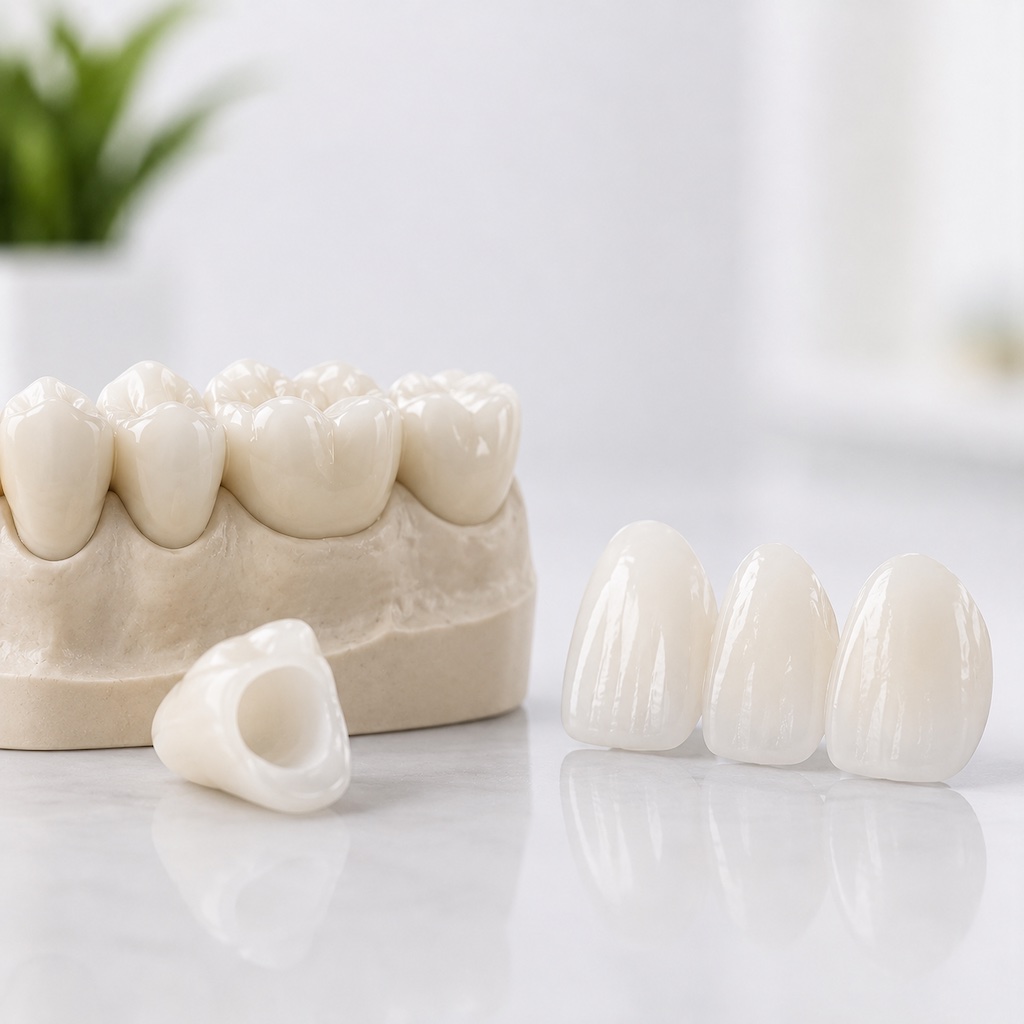
When you decide to refresh your smile, the two most common options you'll come across are zirconium and Emax veneers. Both are modern, metal-free restoration materials that look natural and last well; however, they differ in their structure, their applications, and the aesthetic results they deliver. Which one is the right choice for you depends on the position of the tooth in your mouth, your expectations, and the current condition of your teeth. In this article, we aim to help you make the right decision by comparing the two materials from every angle.
What Is a Zirconium Veneer?
Zirconium is a type of veneer made by layering porcelain over a white, extremely durable substructure. Unlike metal-supported veneers, it contains no metal in its substructure, so it doesn't create that gray line that develops along the gumline over time, and it transmits light just like a natural tooth. Thanks to its high fracture resistance, it is confidently chosen especially for the back teeth, where chewing forces are intense, and for bridgework. It is a versatile option that can be used in both the front and back regions, balancing durability with aesthetics.
What Is Emax (Porcelain Laminate)?
Emax is a material that stands out for its high aesthetic value, produced from a special glass-ceramic known as lithium disilicate. Because its light transmission is remarkably close to that of natural tooth enamel, it offers near-flawless naturalness, especially in the front teeth along the smile line. It is generally used in laminate veneer (porcelain veneer) applications, where a thin layer is bonded to the front surface of the tooth, allowing a minimal amount of healthy tooth tissue to be reduced. It is one of the most preferred solutions in cases where aesthetics are the priority.
Zirconium vs. Emax Comparison
The table below makes it easier to evaluate the two materials side by side under key headings:
| Feature | Zirconium | Emax (Laminate Veneer) |
|---|---|---|
| Aesthetics / Naturalness | High | Very high (closest to enamel) |
| Durability | Very high | High (sufficient for the front region) |
| Ideal Application Area | Front and back regions, bridges | Mainly the front region, single teeth |
| Amount of Tooth Reduction | More | Very little (minimal) |
| Light Transmission | Good | Excellent |
| Suitability for Bridgework | Suitable | Limited |
Which One Is Preferred in Which Situation?
The choice between the two materials usually becomes clear based on the tooth's position in your mouth and the goal of the treatment. If you want maximum naturalness in the front teeth that show when you smile and there isn't much deterioration in your teeth, Emax laminate veneers are generally the most fitting choice; they offer both superior light transmission and very minimal reduction of healthy tooth tissue. On the other hand, in the back teeth, where chewing loads are intense, or in bridgework spanning more than one tooth, zirconium's high durability comes to the fore. Zirconium also provides a more comprehensive solution for teeth with serious discoloration, large fillings, or structural damage.
What must not be forgotten here is that every mouth is unique. Without evaluating the condition of the gums, the bite (chewing relationship), the current color of the teeth, and the patient's expectations together, it is not possible to say which material is more suitable. The right decision only emerges through a clinical examination by a dentist.
What Should You Pay Attention to When Deciding?
When choosing a veneer, you should look not only at the name of the material but at the treatment as a whole. Factors such as the quality of the porcelain used, the dentist's approach to aesthetic planning, and digital smile design influence the success of the result as much as the material does. Two cases done with the same material can yield completely different results due to differences in planning and craftsmanship. At Estetica Denta, with our personalized smile design approach for every patient, we determine together the material best suited to the structure of your teeth and your facial features.
Zirconia or Emax? Decide with a Dentist in Bağlıca
A comparison article can outline the strengths of each material, but the right choice depends on details only an examination reveals: which tooth is being restored, how your bite loads it, and what your gum line looks like. At our clinic in Bağlıca, Etimesgut, this decision is made as part of an aesthetic dentistry consultation, and sometimes both materials end up being used in different areas of the same mouth.
Seeing shade samples and discussing your expectations in person makes the decision far easier than comparing photos online. Patients from across Etimesgut and western Ankara usually complete this evaluation in a single visit, together with a look at wider prosthetic options where relevant. To have the comparison made for your own teeth, schedule an appointment with us.
Frequently Asked Questions (FAQ)
Which lasts longer, zirconium or Emax?
Both materials, when applied correctly, can be used trouble-free for many years. Zirconium is superior in terms of durability and offers an advantage in areas where chewing loads are intense. Emax, on the other hand, has sufficient durability in the front region; in this area, the reason it is chosen is aesthetics rather than durability. The main factor that determines longevity is oral hygiene and regular check-ups.
Will my teeth be heavily trimmed for an Emax laminate veneer?
No. One of the biggest advantages of Emax laminate veneers is that they can be applied by reducing only a very thin layer from the tooth surface. This way, healthy tooth tissue is largely preserved. However, the amount of reduction may vary depending on the current condition of the tooth.
Can I have Emax done on my back teeth?
Emax can also be used in the back region for single-tooth restorations; however, in cases where chewing forces are very intense or in bridgework, zirconium is generally a safer choice. Your dentist, who will assess your bite, will make this decision.
Which one looks more natural?
Since Emax is the material whose light transmission is closest to natural tooth enamel, it generally provides a more natural appearance, especially in the front teeth. Zirconium also delivers quite aesthetic results, but in front-region cases where high naturalness is expected, Emax pulls ahead.
How do I find out which one is right for me?
The most reliable method is a clinical examination. At Estetica Denta, serving in Bağlıca, the structure of your teeth, your bite, and your aesthetic expectations are evaluated to determine the material best suited to you. By booking an appointment, you can find out the solution best suited to your smile.


